1000 Hives · Agriculture & Policy
What happens if we do nothing
New Zealand ran this experiment already.
We know exactly how it ends.
Here is the timeline.
New Zealand ran this experiment already. Not intentionally. Circumstances just unfolded that way. We know how it goes because we watched it happen over 25 years on an island 2,000 kilometres away.
And we are choosing not to learn from it.
Varroa was detected at the Port of Newcastle in June 2022. The national eradication program was abandoned in September 2023. Pyrethroid resistance was confirmed in NSW in January 2026. Here is the timeline if we do nothing about Australian pollination infrastructure.
The phases of inaction
Silent failure
Varroa spreads steadily through managed hive populations. Pyrethroid resistance is confirmed. Beekeepers switch to different chemistry. Costs rise. Some older apiaries become economically unviable and close.
Wild colonies do not survive Varroa. They collapse quietly. No announcement. Backyard beekeepers start losing hives. Some assume it is their fault. Most assume it is someone else's problem.
Production starts to slip slightly. Apple and avocado growers notice reduced fruit set in spring. Almond growers do not feel it yet. But some beekeepers are already raising prices.
Media coverage is scattered. Usually frames it as save-the-bees sentimentality instead of infrastructure collapse. Nobody is very alarmed yet.
The crunch
Varroa pressure peaks. Wild colonies are gone in affected regions. Managed colonies are running on chemistry and triage. Some professional beekeepers cannot sustain it economically and exit the business. Fewer new beekeepers are entering to replace them.
Demand for pollination services exceeds supply. Hives get rented at premium rates. Almond growers compete with apple growers for the same limited pools of colonies. Some get what they need. Others do not.
Crop failures appear. Not everywhere, but noticeably. A grower in the Riverland has 30% yield loss because they could not secure enough hives for that season. Banks get nervous about lending to horticultural operations.
Food prices climb. Nothing catastrophic, but noticeable. Berries and cherries cost more. Avocado prices spike. Almond prices rise because Australian supply is constrained.
System stress
Managed pollination is now a premium service, not a standard input. Some growers can afford it. Others cannot. Those who cannot either intensify production of crops that do not need pollination, or they sell their land.
Regional communities built around fruit and nut production start to decline. Jobs disappear. Packing sheds close. Schools in horticultural regions lose students because families leave.
Export reputation takes a hit. Buyers in China, Japan, and the Middle East get inconsistent Australian produce. They start diversifying to other suppliers. We lose long-term contracts. Market share is very hard to rebuild once it is gone.
The remaining professional beekeepers are exhausted. Managing triple the workload. The knowledge they carry, decades of experience managing Varroa, reading local conditions, training apprentices, walks away with them when they leave.
The new normal
Australia's agricultural output has shifted fundamentally. We produce less of the high-value, pollination-dependent crops. We are left with commodity production. We are more dependent on imports for fresh fruit and vegetables.
Food sovereignty starts to matter more. Food inflation is real. Farming is less diverse, less resilient, more consolidated.
And the worst part. Rebuilding from here costs far more than prevention would have. You have lost the knowledge base. You have lost the economic viability. You have lost the supply chains. Starting from scratch is slower, harder, and more expensive than maintaining what you had.
Australia's managed hive numbers are already declining.
Down 5% in the last year alone, from 866,000 to around 823,000. If that trajectory continues under sustained Varroa pressure, the gap between what agriculture needs and what beekeepers can supply will widen every season.
It is not inevitable
That timeline is based on real data from countries that went through it. But it is not fixed. Every step has an intervention point.
Varroa has been in Australia since June 2022. We are nearly four years in. We are already seeing the early effects. But we are still in the window where coordinated action works. We can still build the infrastructure. We can still train the beekeepers. We can still establish the monitoring systems.
Every year we hope hobbyists will fill the gap, we learn again that they cannot. Scale matters. Consistency matters. Professional management matters.
The case for acting now
Investment in managed hive networks requires real money. It is not glamorous. It does not fit the save-the-bees narrative that gets clicks and donations. It requires treating beekeeping as the essential agricultural infrastructure it actually is, not as an optional lifestyle choice or a marketing opportunity.
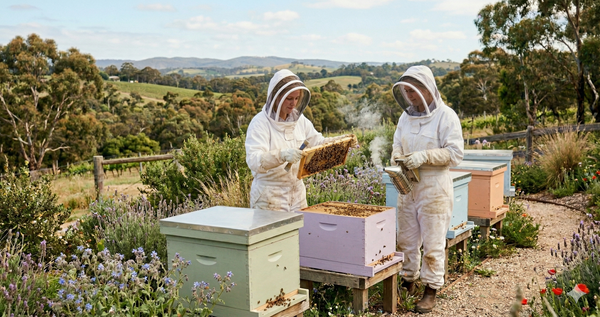
Here is what acting now actually looks like. It means placing professionally managed hives on working farms before those farms lose access to reliable pollination. It means training and retaining beekeepers while there are still experienced operators to learn from. It means building monitoring and treatment systems that can scale, not hoping that backyard enthusiasm fills a gap that requires industrial precision.
New Zealand's beekeeping industry had to do all of this after the collapse. They rebuilt from the wreckage. Pollination fees doubled. The pastoral sector lost an estimated NZ$230 million a year. Beekeepers absorbed punishing winter losses as a permanent cost of doing business. They got there eventually, but it took longer, cost more, and caused real damage to agriculture along the way.
Australia does not have to repeat that. We have something New Zealand did not: a clear view of exactly what is coming and enough lead time to prepare for it. The data exists. The precedent exists. The window exists. What does not exist yet is the coordinated response.
The economics are straightforward.
Every dollar invested in managed hive infrastructure now prevents multiples of that in lost agricultural production later. Every beekeeper retained now is one who does not need to be replaced from scratch in five years. Every hive placed on a farm now is one that is already producing pollination services when the feral population disappears.
This is not a conservation argument. It is an infrastructure argument. Australia does not leave road maintenance until the bridges collapse. It does not wait for the power grid to fail before investing in generation. Pollination is no different. It is a service that agriculture depends on, and it requires deliberate, funded, professional management to sustain.
The good news is we can still prevent the worst of it. The requirement is to act while we still can. Not in five years. Now.