Why this matters now
Australia is losing its bees. Your business depends on them more than you think.
Varroa mite arrived in Australia in 2022 and has now been detected in New South Wales, Queensland, Victoria, South Australia, and the ACT. New Zealand lost nearly all of its wild honey bee population after Varroa established there. Around $12.9 billion worth of Australian crops depend on honey bee pollination every year. When bees decline, food production follows.
From 2025, large Australian companies are required to report on climate related financial risks under the new Australian Sustainability Reporting Standards (ASRS). Nature and biodiversity reporting is next. The Taskforce on Nature related Financial Disclosures (TNFD) already recognises pollinator decline as a material business risk, and Australian regulators are watching closely. Pollinator health is no longer just an environmental issue. It is a business risk your stakeholders, investors, and customers expect you to address.
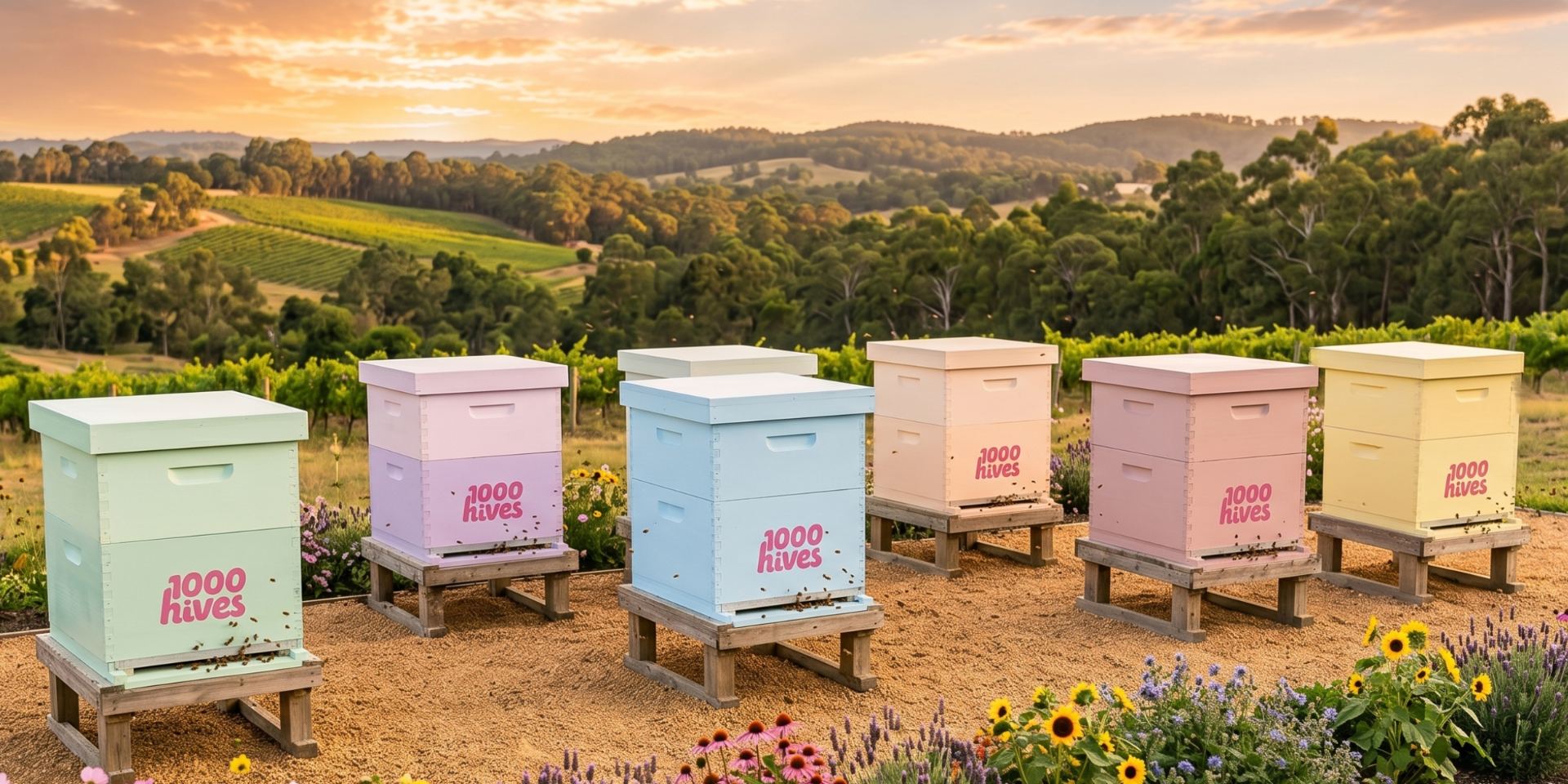
A 1000 Hives partnership gives you a concrete, verifiable response to that risk. Not a logo on a website. Actual hives, on actual farms, maintained by actual beekeepers, producing actual results you can report on.
honey bee pollination
depend on bee pollination
confirmed Varroa mite detection
Not a charity. Not a donation.
This is a commercial conservation partnership with full accountability
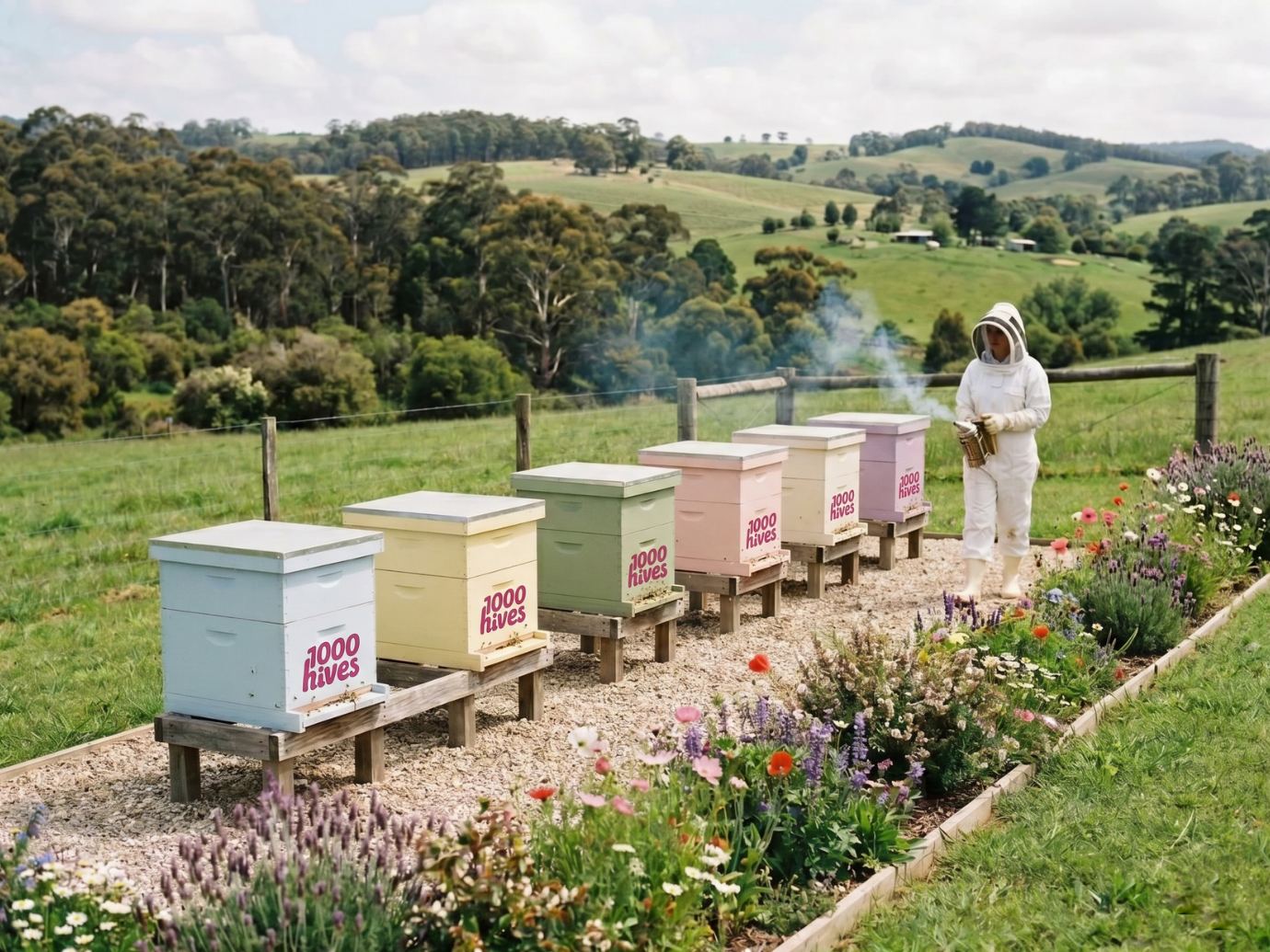
Every 1000 Hives hive is permanently embedded on a working farm. It stays there. It is not trucked between properties chasing pollination contracts. Every beekeeper in our network is a certified, paid professional who manages one farm per day under strict biosecurity protocols enforced through GPS logging, mandatory checklists, and geotagged photo verification.
Your sponsorship does not disappear into a general fund. It goes to a specific set of hives on a specific farm, maintained by a specific beekeeper. Every inspection is logged. Every claim is verifiable. When you tell your customers or your board that you are funding bee conservation, you can prove it.
What your partnership delivers
Everything here is designed to give your brand tangible, usable value from day one.
Branded honey
Premium Australian honey with your logo on the label. Delivered to your office annually. Use it as client gifts, staff rewards, or customer giveaways. People remember the business that gave them real honey from a real conservation project.
Content you can use
With your logo displayed on active beehives, you'll receive quarterly photos, videos, and farm updates that showcase your environmental partnership in action. Professionally prepared and ready for social media, sustainability reporting, and stakeholder engagement.
Impact reporting
Annual impact report with real numbers. Hives maintained, colony health, pollination area, beekeeper hours. Formatted for your ESG or sustainability reporting. Not vague claims. Data your compliance team can actually use.
Employee engagement
Bring your team to the farm. Meet the beekeeper, see the hives, and learn about the conservation work their company is funding. Better than another team building workshop. People actually talk about this one.
Brand visibility
Your logo on our hives, our website, and our social channels. We are constantly filming and photographing our hives on farms across Australia. Your brand shows up in real conservation content, not a logo wall nobody looks at.
Greenwashing protection
Every claim you make about this partnership is backed by GPS verified inspection data, geotagged photos, and independently logged beekeeper reports. When a customer or journalist asks "is this real?" you have the answer.
Employee engagement
The Bee Ambassador program
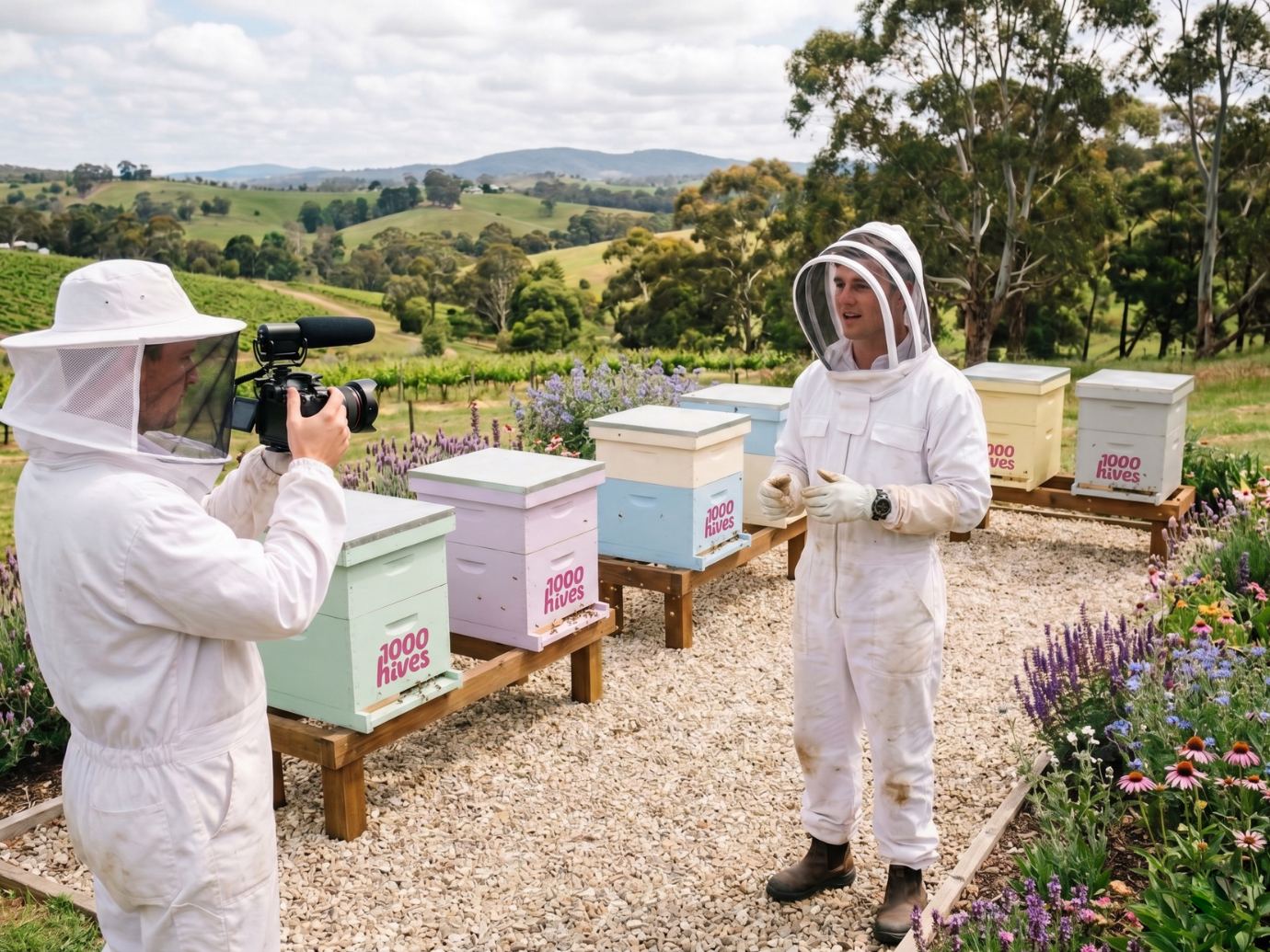
Higher-level partners receive access to an exclusive Bee Ambassador experience. Our production team creates a professionally filmed on-farm feature with your beekeeper and sponsored hives, giving your organisation a unique behind-the-scenes look at the conservation and pollination resilience work it is helping fund.
Your team is then invited to join a live Q&A session where they can ask questions directly, learn about the biosecurity challenges facing Australian bees, and hear firsthand from the beekeeper managing the hives.
The filmed segment is authentic, cinematic, and grounded in real-world beekeeping. The Q&A is personal, interactive, and unscripted. It is not a corporate presentation. It is a real beekeeper on a real farm sharing the realities of bee health, biosecurity, and conservation with your team.
People remember the experience. It creates a genuine connection to the partnership, strengthens internal engagement, and helps build long-term support across your organisation.
Higher-level partners can also access exclusive on-farm visits. These experiences give your team the opportunity to meet the beekeeper, inspect the hives, learn about bee health and biosecurity, and experience the impact of the program firsthand.
Who this is built for
Industries with the most to gain
Any business can partner with us. But some industries have a direct connection to pollination, agriculture, and sustainability that makes this partnership especially powerful.
Food and beverage
Your supply chain depends on bees. A partnership with 1000 Hives demonstrates that you are actively investing in the pollination systems your products rely on. Branded honey makes a natural extension of your product line for gifts and promotions.
Agriculture and food production
Orchards, almond growers, and food producers are directly exposed to pollinator decline. A corporate partnership signals to your customers and industry that you are investing in the ecosystem your supply chain depends on. Farm visits become a powerful client experience.
Financial services and insurance
Pollinator decline is a recognised systemic risk in agricultural lending and insurance. A 1000 Hives partnership gives your ESG reporting concrete biodiversity metrics aligned with TNFD and emerging Australian sustainability reporting frameworks.
Hospitality and tourism
Hotels, restaurants, and tourism operators get a genuine sustainability story, branded honey for guests, and the option to offer farm visit experiences. Your guests get a real connection to the land, not a token gesture.
Professional services
Law firms, accounting firms, and consultancies looking for a meaningful corporate social responsibility initiative. Branded honey is a memorable client gift. Farm visits are a team building experience that people actually talk about.
Retail and consumer brands
Your customers care about sustainability but they are tired of vague claims. A verifiable bee conservation partnership with real hives, real farms, and real data gives your brand a story that stands up to scrutiny.
Full transparency
Where your money goes
Your partnership directly funds the placement and long-term management of real beehives on working Australian farms. That includes hive equipment, bee colonies, protective gear, professional beekeeper management, regular inspections, environmental monitoring, and the biosecurity measures that help keep the bees healthy.
The honey produced by these hives also generates revenue, which is reinvested into expanding the network, supporting more farms, and establishing more hives. We are completely transparent about that. It is a key part of what makes the model commercially sustainable and capable of delivering long-term impact, rather than relying solely on sponsorship funding.
There are no hidden costs and no vague "general fund" allocations. You can see exactly where your support goes. Which farm hosts your branded hives, which beekeeper manages them, and the tangible infrastructure and environmental outcomes your partnership helps create.
Sustainability reporting
Built for the reports your board actually reads
Mandatory climate reporting under ASRS is already in effect for large Australian companies. Nature and biodiversity reporting is the next wave, with the TNFD framework gaining traction globally and Australian regulators signalling that mandatory nature related disclosures are coming. Pollinator health is explicitly recognised as a biodiversity risk under TNFD.
Our impact reports give you verifiable biodiversity metrics you can use in sustainability reporting today and be ready for mandatory requirements when they arrive. Real data. Something your compliance team can work with, not just a feel good paragraph in your annual report.
How it works
Three steps. No pressure. You decide on your own time.
Tell us about your business
Fill in the form below. It takes 30 seconds. No commitment. No credit card.
We send you everything
Within 24 hours you receive a detailed partnership guide with pricing, inclusions, and a downloadable info pack you can take to your team.
You decide when you are ready
Review the guide. Share it with your decision makers. When you are ready to move forward, reply to the email and we will set up a call.
Common questions
Is this a donation or a sponsorship?
How do you prevent greenwashing?
Can we use this for ESG or sustainability reporting?
What is the time commitment?
What happens after I fill in the form?
How much does it cost?
Where are the farms?
What do we actually receive?
Can we visit the farm?
What if we just want to start small?
Get your partnership guide
Fill in your details and we will email you a detailed partnership guide within 24 hours. Full pricing, inclusions, and a downloadable info pack for your team.
No phone calls. No follow-up spam.
Thanks for your interest.
We'll be in touch shortly.
You will receive an email within 24 hours with your personalised partnership guide, full pricing, inclusions at every tier, and a downloadable info pack you can take straight to your team. No phone calls unless you ask for one.