
1000 hives
The solution
1000 Hives is a community funded conservation initiative building a national network of one thousand permanently managed hives on working farms across Australia. Every hive replaces the free pollination that Varroa is wiping out.
Behind every hive there is a sponsor, a working farm, and a commercial beekeeper. The sponsor backs the hive from as little as ten dollars and follows it from build to placement. The farm gets year round pollination at no cost. The beekeeper manages the colony, runs the inspections, and updates the sponsor with photos and data straight from the property.
Every hive is fitted with sensors that track weight, temperature, humidity, and acoustic signatures every fifteen minutes. That builds a real world managed hive dataset we are opening to Australian universities studying Varroa, colony health, and food security. As a sponsor you see the same data the scientists do.
The embedded model
Our hives stay.
That is the whole point.
Most commercial beekeeping in Australia is migratory. Hives get trucked between properties chasing pollination contracts and flowering seasons. It is also one of the fastest ways to spread disease between properties.
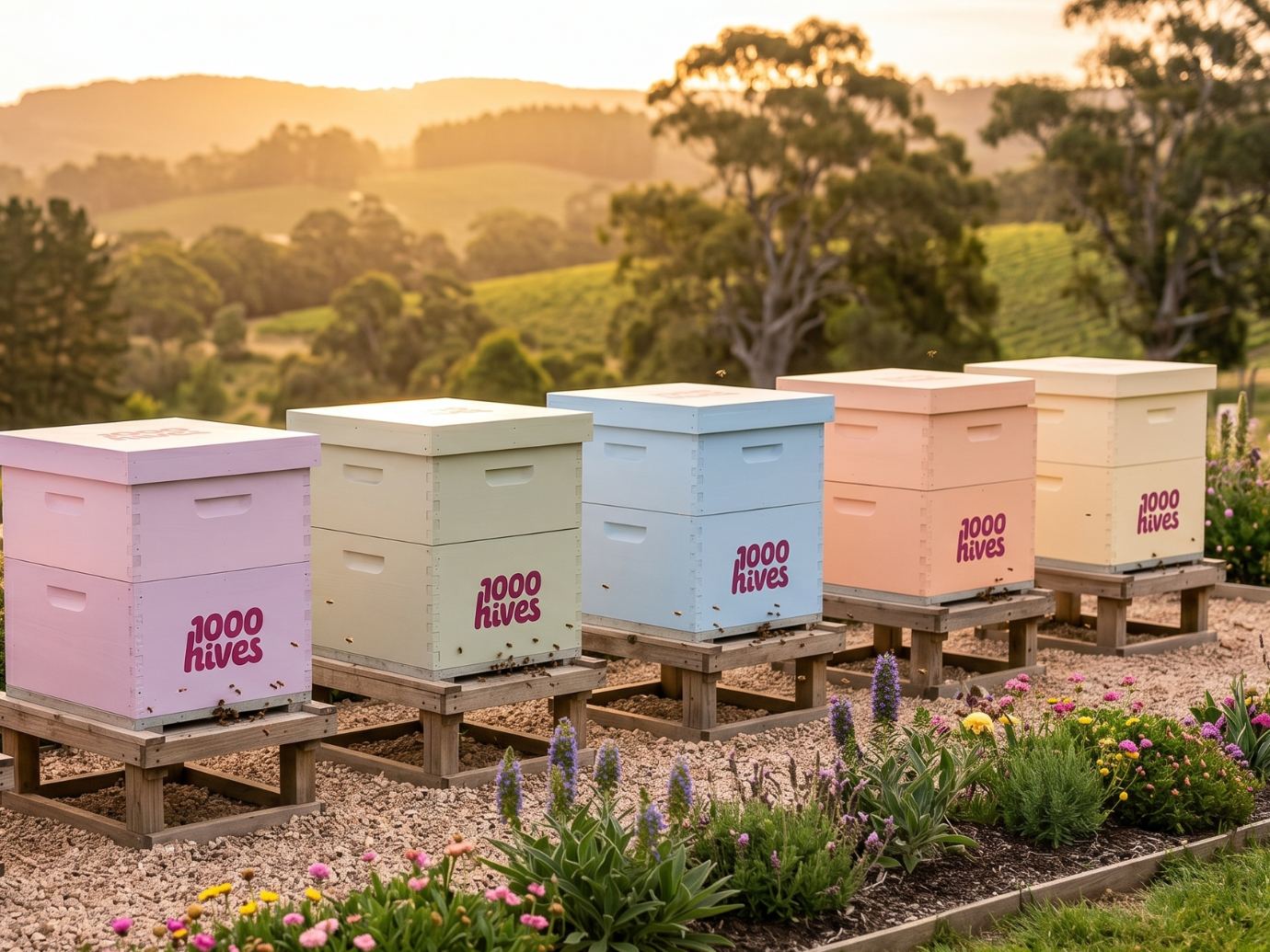
Every hive we place is permanently embedded on its property. It stays there. It becomes part of the land, part of the local ecosystem, part of the landscape. The bees learn the environment. The colonies adapt to local conditions. The land partner knows what is on their property and why it is there.
This is not the cheaper way to do it. It is the only way we are willing to do it.
Biosecurity
One property per day.
No exceptions.
Varroa mite arrived in Newcastle in June 2022 and has now been detected across five states and territories. New Zealand lost nearly all of its wild honey bee population after Varroa established there. This is not a future threat. It is happening now.
Varroa spreads through the movement of hives and equipment between properties, and naturally between colonies within foraging range through drifting and robbing behaviour. The fastest way it moves across regions is on the back of a beekeeper visiting multiple properties in a day. So every 1000 Hives beekeeper visits one property per day. One site. One localised zone. That is it. Enforced through GPS logging, mandatory checklists, and geotagged photo verification in our beekeeper app.
Three properties in a day is three times more efficient on paper. But we are not building for efficiency. We are building for integrity. If the biosecurity is not right, nothing else matters.
per day

Hive placement
Every placement is assessed individually
We place around 25 hives per property, spread across the land in smaller groups to reduce foraging pressure and give the bees access to a wider range of pollen and nectar. That is better for the colonies and better for the property.
We look for east or northeast facing positions for early morning sun. Natural afternoon shade from a tree line or shed. Proximity to water but not in a damp spot. Distance from livestock and machinery. In cooler regions, we avoid low-lying frost pockets that can stress colonies overnight.
When a land partner sees how we assess their property, they know we take their land seriously. That trust is earned.

Native habitat
Beyond the Hive
We care about all pollinators, not just managed beehives. According to CSIRO, Australia is home to more than 2,000 native bee species. Most are solitary and do not produce honey, but they are essential pollinators for native plants and play a critical role in the ecosystems around our hive sites.
Every property in our network receives 100 native plants selected for the local region, planted in a dedicated habitat area on the land. These plantings support wild pollinators including native bee species, hoverflies, and butterflies alongside our managed colonies.
Managed beehives and native pollinators coexist well when habitat is diverse. That is what we build. A pocket of biodiversity on every property we work with.
Who we are
Not a charity.
Not a commodity operation.
Commercial conservation.
Deliberately.
1000 Hives is built on a belief. Conservation works best when it is commercially sustainable. Not a charity chasing donations and hoping for the best. Not a commodity operation chasing honey yields at the expense of the bees. A model that puts permanent hives on working land, protects the pollinators that our food supply depends on, and gives every person involved a reason to stay in it for the long term. That is how we get to 1000 hives.
How the money works
Sponsors fund it.
Honey sustains it.
Everyone sees the numbers.
Every hive starts with a sponsor. Sponsorship pays for the bees, the boxes and the placement on working land. Sponsors follow the hive from day one with photos and reports straight from the property.
From there the hive pays for its own keep. Ongoing inspections, chemical-free varroa treatments, maintenance and beekeeper fees are covered by the honey those hives produce. Good bee management is the goal. Honey is the by-product that sustains the care. That is what commercial conservation looks like in practice. Once a hive is sponsored, it sustains its own care season after season.
No hidden funding gap. No reliance on government grants. Every dollar has a clear purpose and every person in the network gets something real in return.

Our position on the industry
We are not here to compete
Most experienced beekeepers in Australia are operating independently with limited infrastructure, limited reach, and limited access to the kind of land partnerships we are building. Many of them have deep expertise and a genuine love for the craft that is underutilised at scale.
Those beekeepers are the backbone of this network. We bring them in as certified beekeepers paid above industry rates, with established land partnerships, app based tools, and the backing of a conservation brand that creates demand for their work. This is not a charity gesture toward the industry. It is a recognition that experienced beekeepers are the most valuable asset we have.
We only place hives on properties that do not currently have managed bees. That is a biosecurity decision as much as it is a values one. Our one-property-per-day protocol only works if we control every aspect of what is happening on the land. It also means we are not competing with anyone already doing the work. We are here to grow the industry, not take from it.
How we hold ourselves accountable
Every inspection is logged. Every claim is verifiable.
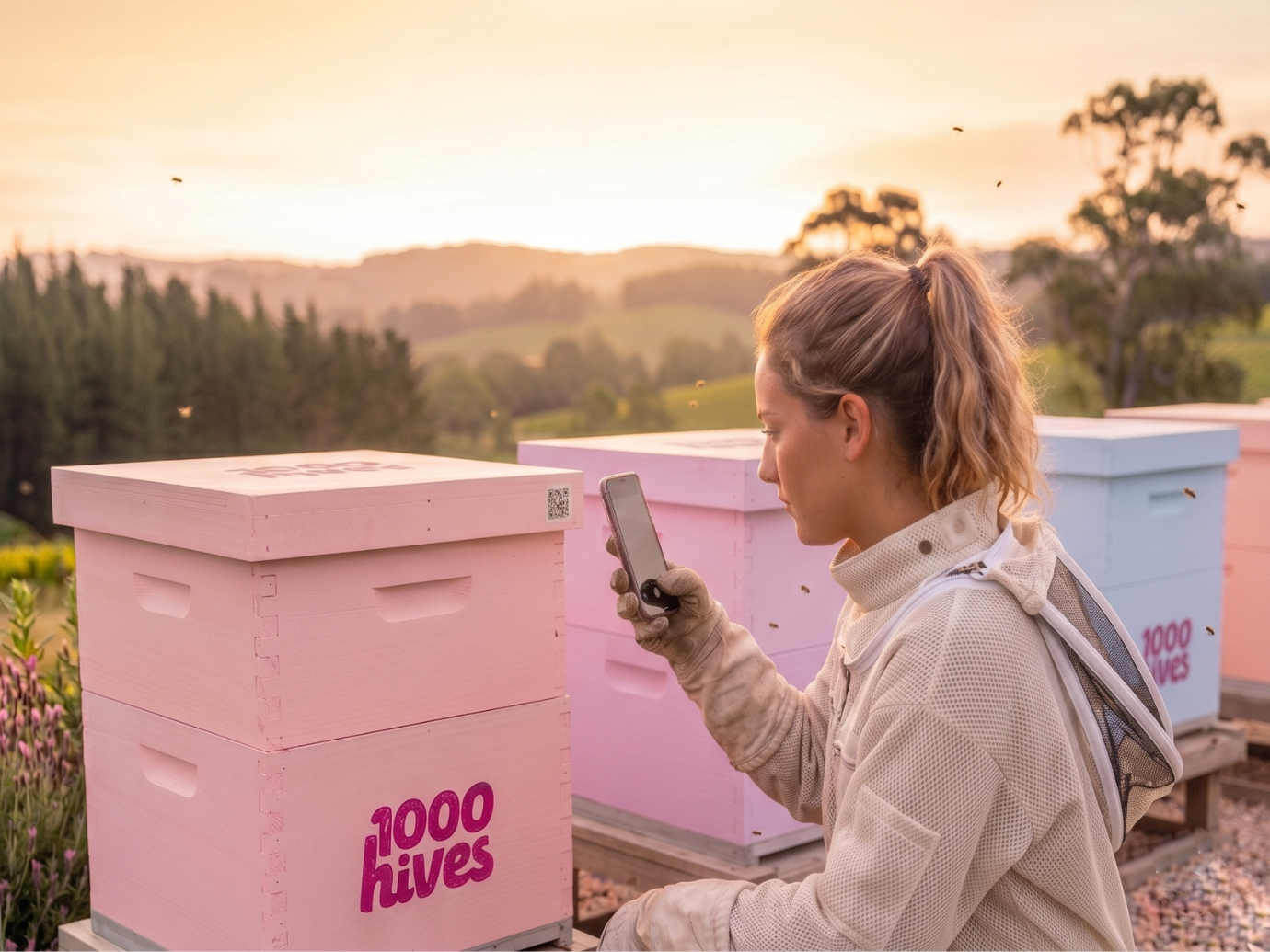
Every hive inspection is recorded through our beekeeper app. GPS verified location. Geotagged photos. Mandatory checklists. This is how we prove that what we say is happening in the field is actually happening in the field.
Every beekeeper works through a tiered certification framework. Provisional for the first season with a spot check at 90 days. Certified after a full season above 95% compliance. Senior after two or more seasons with the option to mentor new beekeepers coming into the network.
Sponsors get those inspection reports directly. Land partners get updates on the bees on their land. During peak seasons when hive activity is highest, updates are more frequent so you can follow what is happening in real time. We would rather show the data than ask people to take our word for it. If something goes wrong with a hive, you will hear about it from us before you hear about it from anyone else.
Three groups. One network.
Every hive in the network exists because these three groups showed up. None of them are more important than the others.
Land partners
Landowners and hosts who open their gates to us. Farms, orchards, lifestyle blocks and rural properties. They pay nothing. They do nothing with the bees. In return they get year round pollination, 100 native plants for their property through our Beyond the Hive initiative, regular updates on the hives on their land, and a selection of honey each season where production allows.
Certified beekeepers
Experienced professionals paid above industry rates and equipped with everything they need. Strict biosecurity protocols. App logged inspections. A certification pathway that rewards consistency and gives their expertise a career structure most independent beekeepers never get access to.
Hive sponsors
People and businesses who fund the hives. You get regular updates from your certified beekeeper with photos, inspection reports, and colony health data. Updates are more frequent during peak seasons when the bees are most active. You see exactly what your money built and exactly how the bees are doing. Real hives on real properties with real accountability.
Where we are heading
We are early.
Here is what we are building toward.
Right now we are building the foundations. Setting up the systems, securing land partnerships, onboarding our first certified beekeepers, and preparing for our first season of hive placements. These numbers are where we are heading. As the hives go in, this section will fill with real data.
placed across Australia
active conservation apiaries
working land nationwide
in the network
conservation management
habitat areas across the network
There is a place for you in this
Land you want to put to better use. Beekeeping skills you want to apply professionally. Or the desire to fund something real. Whether you host a working farm, own a lifestyle property, or just want to sponsor a hive, the network has room for you.